

menu

Best Post Workout Snacks

Katie Ullery-Syvarth, RD, LD, CSSD
Linked In: Katie Syvarth
Phone: 859-429-3205
Post workout fueling is the ticket to improve muscle recovery. Look to include 3 categories; Carbs, Protein, and Hydration within 60 minutes of completing exercise. Ideally looking at a 3:1 ratio of carbs to protein- so about 45g of carbs:15g of protein, along with fluids to aid with rehydration.
The best way to remember and understand recovery nutrition needs is to use the 3 R’s.
- Replenish the depleted Energy storages. Carbs provide energy!
- Rebuild the broken down muscles. Protein helps to repair muscles.
- Rehydrate! Refill the loss of Fluids from sweat.
Looking at this list, some people may be a bit confused. In general, the fitness industry tells us we need protein, protein, and more protein. Although protein is one part of what we need, that is not the whole picture.
Research tells us that in addition to rebuilding with protein, we need to make sure we fill back up our glycogen (cells with energy) stores as well (read more here: https://doi.org/10.26773/mjssm.230907). It is only when we replenish glycogen through carbs that our body can use protein to rebuild muscles. Without carbs, protein is broken apart and some of that goes to be used as energy instead. This takes longer and isn’t the body’s preferred method of energy. So you actually need more carbs than protein after a workout.
Let’s spend some time breaking each one of these R’s down. To understand how we can use this post-workout fuel to our advantage.
Replenish the depleted Energy storages.
Carbs provide energy! Energy is what allows us to replenish glycogen and prepare for our next performance.
When we do a workout, we deplete the carbs that are stored in our cells and liver (glycogen). After a workout, replenishing glycogen is the body’s primary goal as this is what is necessary for life. So when we have that post workout snack we want to make sure we are getting plenty of carbs. Typically we want to do a 3:1 ratio of carbs to protein. Yes you read that correctly, we need more carbs post workout, than we do protein.
Examples of replenishing carbs are:
- Milk
- Crackers
- Fruit gummies
- Fruit
- Applesauce pouches
- Drinkable yogurt
- Dried fruit
- Bread

Rebuild the broken down muscles.
Protein helps to repair muscles. Muscles break down and tear in small amounts during a workout. It is the rebuilding of those small tears that allow us to get stronger.
Within the 1-2 hours following a workout, your cells are in a state where they absorb at the highest rate. This is why having a postworkout snack as soon as you can after training is so pivotal for recovery. When we are looking at protein, we have to realize that for best optimization we need to have it multiple times during the day. We can’t just have dinner and a post workout snack as fuel that day and hope that we are meeting our needs. In order to help with muscle growth and recovery, having protein 3-5x a day is going to be key. So yes we need it as part of our post workout fuel. But that isn’t quite enough to recover the muscles and cells in your body that are rebuilding all day long.
Examples of proteins that rebuild (goal is 10-20g):
- 16 oz glass of chocolate milk
- 1 nature valley protein bar
- 1 cliff bar
- 1 chomps beef stick
- 1 hearty spoonful of peanut butter

Rehydrate lost fluid.
Refill the loss of fluids from sweat- although this seems logical, rehydrating can be one of the easiest things to forget during recovery.
When we sweat, we are losing both water and different minerals. Although we lose some calcium, magnesium, and potassium, we lose far more sodium than anything else. The amount of sodium lost in an athlete’s sweat varies greatly depending on the person. Some athletes may lose 350 mg of sodium in a workout while others may lose up to 2300mg. This depends on a lot of factors; heat, humidity, intensity of the workout, and equipment being worn. The best rule of thumb for rehydrating post training or event is to make sure you are including fluids + electrolytes + carbs. This can come in any concoction you create.
Examples of fluids that rehydrate:
- Gatorade/Powerade
- Electrolyte Drink + carbs
- Water + pretzels
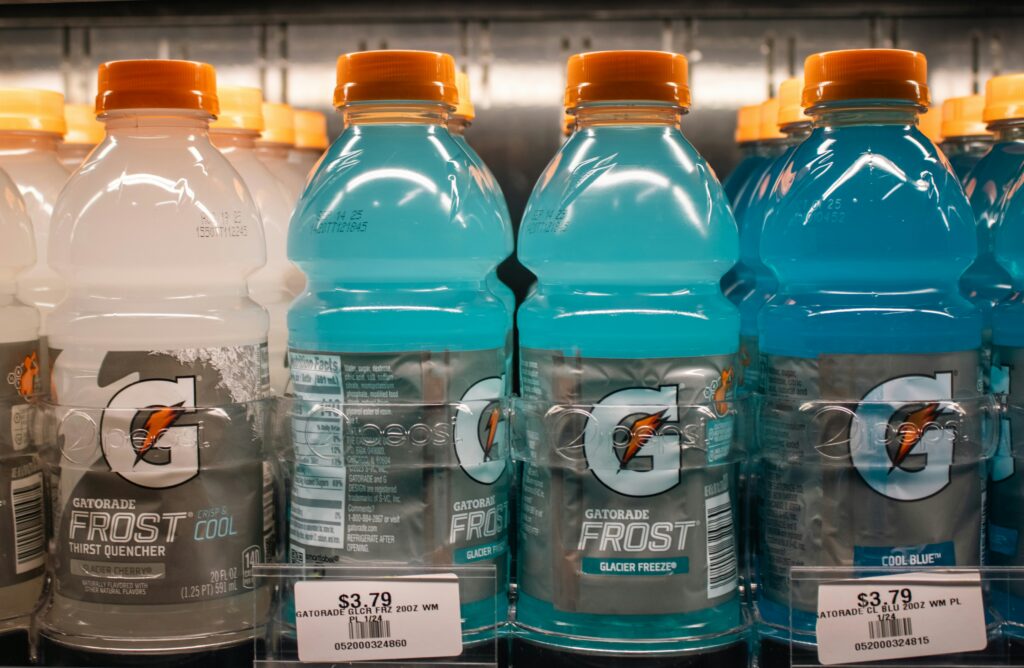
So now that we have learned about all 3 R’s, what does a post workout snack practically look like? Here is a list of some recovery snacks that can work for you in all different types of settings:
Recovery Snack Ideas:
Whether recovering at home or on the go, here are some of our favorite snacks to consume after a workout.
Post workout snacks for when you are at an away game (snacks that will fit into your bag):
- Trail mix + applesauce pouch + water
- PBJ + gatorade/powerade
- Protein bar + banana + gatorade/powerade
- Beef stick + pretzels+ water
Post workout snacks to have when you get home (come together with no effort):
- 16 oz chocolate milk + banana
- Drinkable yogurt + granola bar + water
- Salami/pepperoni + turkey + crackers
- Peanut butter + pretzels + banana
Post workout snacks when you’re craving variety (come together with a little effort):
- Smoothie with yogurt, milk and fruit
- Oatmeal packet + 8-10 oz chocolate milk
- Yogurt parfait w/ granola, fruit, and chia seeds
- Peanut butter toast w/ sliced strawberries
If you haven’t been doing post workout fuel now is a great time to start! Even if you are an athlete that is going home and eating dinner once you get home from practice, drinking milk, eating yogurt or consuming a quick smoothie will help replenish what you have lost without making you full for dinner.
Does Timing Matter?
Yes, timing matters! According to Amawi et. al. (2024; doi: 10.3389/fnut.2023.1331854), the 60 to 90 minutes after recovery is often referred to as the “anabolic or metabolic window” in which there is a “heightened responsiveness of exercised muscles to nutrient intervention.” Essentially meaning, your body can perform the 3 R’s the best within 60-90 minutes after finishing your workout.
What if I am not hungry after training or I lose my appetite?
Losing hunger during your recovery window is a common experience. When you get to a certain intensity in training our hunger hormone (Ghrelin) is suppressed and for some takes a while to come back. But having a drink like chocolate milk, drinkable yogurt, or smoothie can be helpful. These liquids don’t require the stomach to have to churn or work as much. Having these carbs also helps to stabilize the blood sugar levels after your training and helps the body start to regulate hormones and hunger cues- meaning our appetite comes back quicker and we will find it easier to continue to fuel throughout the day.
Clinical Insight from Our Practice
After working hard training 2x a day for 3 months, Jason was tired of being tired. When we first started meeting he was training 7 days a week and not eating enough to feed a toddler, let alone a teenage boy. But after a few sessions with our team and strategically adding in snacks, like chocolate milk, after his workouts he started noticing his legs recovering from workouts faster and that he was able to move weight in the gym much easier than before. This gave him the confidence he needed to improve fueling in other areas in his life. Now he feels energized, confident in nutrition, and ready to perform at every game.
You see, the main thing Jason needed wasn’t harder practices. He needed someone to come alongside him and teach him how to fuel better.
Although a lot of these concepts may feel like review for you, according to a study in 2025 most athletes are not meeting their needs for post-workout nutrition (https://doi.org/10.3390/nu17223629). Recovery starts immediately after exercise, and choosing carbs, protein, and fluids/electrolytes is vital to helping replenish, rebuild, and rehydrate quicker so you can come back stronger and perform better at your next workout or game.
For more help putting this into practice, check out our website https://nutritionatplay.com/ or shoot us an email at info@nutritionatplay.com to learn more about working with us one on one!


